
How Should a Medical Waste Treatment System Be Selected?
Selecting the right technology for medical waste management is critical in terms of investment costs, operating expenses, environmental safety, and long-term sustainability. Today, healthcare facilities vary significantly in size and waste generation volumes. Therefore, a single treatment model cannot be effectively applied to every country or region.
The Impact of Waste Volume on System Selection
Medical waste is generated from a wide range of sources, including small clinics, large urban hospitals, university campuses, research laboratories, dental practices, and veterinary centers. Although treating waste at the point of generation may appear to be the ideal solution in theory, in practice this approach presents numerous challenges.
Installing an individual sterilization system at every healthcare facility is often not sustainable due to high capital investment requirements, operational difficulties, maintenance needs, and the necessity for trained personnel. As a result, medical waste is centrally collected and processed at licensed treatment facilities in many countries.
In centrally managed systems, responsibilities can be clearly defined, supervision becomes easier, and financial sustainability can be achieved more effectively. Countries such as United States, Türkiye, United Kingdom, Ireland, China, Czech Republic, Jordan, Azerbaijan, Brazil, and South Africa have successfully implemented centralized medical waste management systems.
The primary objective of medical waste management is to ensure that all infectious waste is treated without exception. Even small quantities of untreated waste can pose serious biological risks. Recent global pandemics have once again demonstrated the critical importance of controlling sources of infection. For this reason, centrally managed systems with high collection rates provide significant advantages in terms of safety and sustainability.

Medical Waste Management Approaches by Country
Over the past two decades, a considerable portion of medical waste treatment projects implemented in low- and middle-income countries has been based on small-capacity, on-site sterilization systems. The widespread adoption of this approach has been influenced by equipment manufacturers, consulting firms, and international funding programs.
Small-capacity integrated shredding and sterilization systems offer a more environmentally friendly alternative to traditional incineration facilities. However, over time, many of these systems have become inactive due to inadequate maintenance, insufficient technical support, and high operating costs.
As a result, although thousands of small treatment units have been installed in certain regions, a significant number of them are not operated regularly and fail to achieve the expected treatment performance.
In contrast, developed countries increasingly promote centralized sterilization facilities and favor high-capacity systems with advanced automation levels. This approach provides lower operating costs, more effective monitoring, and higher waste collection rates.
Design of High-Capacity Systems
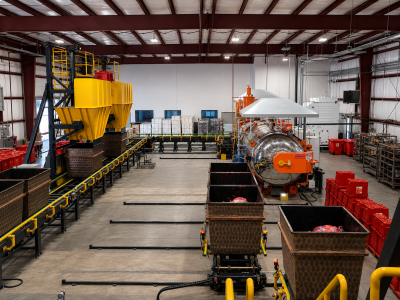
Centralized sterilization facilities offer lower investment costs per kilogram of treated waste due to their high processing capacities. This advantage allows facilities to be designed with more advanced levels of automation.
Modern centralized facilities may include:
- Automatic loading systems
- Conveyor lines
- Robotic handling solutions
- Centralized control systems
- Remote monitoring and reporting infrastructures
These technologies minimize operator intervention and significantly improve workplace safety.
In small-capacity systems, standardized designs are generally used, and advanced engineering solutions are often not feasible due to budget limitations. Furthermore, maintaining a large number of units across multiple locations increases the complexity of service and maintenance operations.
In high-capacity facilities, the limited number of installed systems enables manufacturers to provide more efficient service, training, and spare parts support.
From a technical perspective, designing the shredder and autoclave as separate systems often delivers better performance in large-scale facilities. As capacity increases, integrated shredding systems become more complex to operate and maintain. For this reason, post-shredding systems are preferred in many of the world's largest medical waste treatment facilities.
Capacity Comparison and Economic Analysis
In on-site treatment applications, typical capacities range from 5 to 200 kg/hour. In centralized systems, capacities generally start at 500 kg/hour and can exceed 6,000 kg/hour.
Example Scenario: A City with a Population of 500,000
Small-Capacity Integrated Shredding Systems
|
Parameter |
Value |
|---|---|
|
System Capacity |
5–200 kg/hour |
|
Total Investment |
€3,000,000 – €5,000,000 |
|
Operators and Technical Personnel |
50–100 people |
|
Operating Cost |
€0.10 – €0.25/kg |
|
Waste Collection and Treatment Rate |
Maximum 80% |
|
Average Facility Lifetime |
5 years and above |
Centralized System (Integrated Shredding or Post-Shredding)
|
Parameter |
Value |
|---|---|
|
System Capacity |
500–6,000+ kg/hour |
|
Total Investment |
€500,000 – €1,000,000 |
|
Operators and Technical Personnel |
Approximately 5 people |
|
Operating Cost |
€0.03 – €0.07/kg |
|
Waste Collection and Treatment Rate |
Up to 95% |
|
Average Facility Lifetime |
10 years and above |
General Comparison
|
Criteria |
Small-Capacity Systems |
Centralized Systems |
|---|---|---|
|
Investment Cost |
High |
Lower |
|
Operating Cost |
High |
Lower |
|
Personnel Requirement |
High |
Low |
|
Maintenance Management |
Difficult |
Easier |
|
Collection Efficiency |
Medium |
High |
|
Automation Level |
Low |
High |
|
Facility Lifetime |
Shorter |
Longer |
|
Scalability |
Limited |
High |
Conclusion
When selecting a medical waste treatment system, decision-makers should consider not only the initial investment cost but also long-term operating expenses, maintenance requirements, collection efficiency, and biological safety criteria.
Particularly in medium-sized and large cities, centralized sterilization facilities offer significant advantages through lower treatment costs per kilogram, higher collection rates, reduced staffing requirements, and longer facility lifetimes. Consequently, centralized high-capacity systems have become the preferred solution in many developed countries.
Akarmak Solutions
Akarmak develops high-capacity integrated shredding and, in particular, post-shredding sterilization systems for centralized medical waste treatment facilities. Our highly automated solutions provide low operating costs, high energy efficiency, and extended equipment life, offering municipalities and private waste management companies a sustainable investment model.
A sample system video can be viewed here:
Touch- Free Autoclave Plant for Medical Waste
